Spiti Valley: A Remote Himalayan Frontier Across Six Unforgettable Days
A six-day journey through Spiti, India’s Tibetan-influenced highland, proved to be the highlight of a 12-day solo adventure in the country. The region’s landscapes feel otherworldly, the people exceptionally welcoming, and the culture remarkably preserved amid globalization. This article offers a concise narrative of the route, sights, and experiences encountered along the Spiti circuit, with practical notes for travelers considering a similar expedition.
Getting there and the approach
Starting from Shimla, the colonial-era hill station and capital of Himachal Pradesh, the ascent into Spiti begins through progressively rugged terrain. Himachal Pradesh is a compact state with striking geographic and cultural diversity: temperate forests, alpine landscapes, and high-altitude deserts, each valley boasting its own customs, architecture, and dress. In Spiti, as altitude rises, Tibetan cultural influences become more pronounced, coexisting with Hindu communities in a dynamic, peaceful confluence.
Day 1: Shimla to Kalpa, with a stop at Chitkul
– The ride from Shimla toward Kalpa introduces riders to green hills giving way to stark mountain scenery. Kalpa, perched near the Kinner Kailash range, presents a striking contrast between its colorful wooden homes and the surrounding bare Himalaya.
– A detour to Chitkul—the first settlement along the Spiti corridor with both Hindu and Tibetan Buddhist temples—offers an authentic glimpse of rural life: animals in mud alleys, women transporting wood, and vernacular architecture rich with carvings. The setting blends forested slopes with the first hints of autumn’s orange hues and swiftly moving streams.
Day 2: Kalpa to Tabo (entry into Spiti via Kalpa’s gateway)
– In Kalpa, the backdrop of the Kinner Kailash range frames a village life of fertile farmland and vibrant homes against a desolate high-altitude horizon.
– Inside Kinnaur, approximately half the local population practices Hinduism while the other half follows Tibetan Buddhism, highlighting the region’s spiritual plurality.
– A Kath-Kuni style Hindu temple stands as a primary architectural landmark, and visitors may encounter woodcarvers at work, their intricate motifs illustrating a timeless craftsmanship.
– Administrative considerations for foreign visitors in Spiti include the Protected Area Permit (PAP), essential for safeguarding local customs and the ecosystem in border regions. Unlike some regions with electronic permits, Spiti’s PAP may require in-person processing at select centers, a detail that affects scheduling.
– As the route progresses, the landscape becomes raw, arid, and rocky. Roads cling to cliff faces with the Spiti River rushing below, punctuated by military checkpoints and occasional debris-cleared sections marked by green flags.
Arrival in Spiti and first impressions
– Crossing into Spiti feels like stepping into another world: mud-brick and whitewashed Tibetan-style structures replace earlier wood-architecture, and the atmosphere shifts toward an austere, elemental beauty. The light in the late afternoon often bathes the landscape in a golden glow, amplifying the dramatic scale of the desert-like terrain.
Day 3: Tabo to Dhankar and onward to Kaza
– A short acclimatization hike to meditation caves near 3500 meters helps with altitude adjustment, though the caves themselves are modest. The Tabo Monastery remains one of the region’s crown jewels: a mud-constructed complex that represents the oldest continuously operating Buddhist enclave in the greater Himalaya, founded in 996. It houses 10th-century clay statues and original murals, preserved in their historical context, with newer features such as a gold-leaf-studded stupa.
– Dhankar Monastery, perched on a cliff’s edge, offers dramatic architecture and spectacular views from upper terraces. It is a part of the Spiti circuit, an itinerary popular with domestic travelers and social media enthusiasts alike. For quieter vantage points, exploring higher sections of the monastery tends to yield more solitude.
– The journey culminates in Kaza, the largest town and de facto administrative center of Spiti, home to a small market, a single fuel station, and a hospital—the practical hub for travelers and locals alike. Kaza serves as a base for deeper exploration of the valley over the next days.
Day 4: Ki Gompa (Key Monastery) and the western Spiti corridor
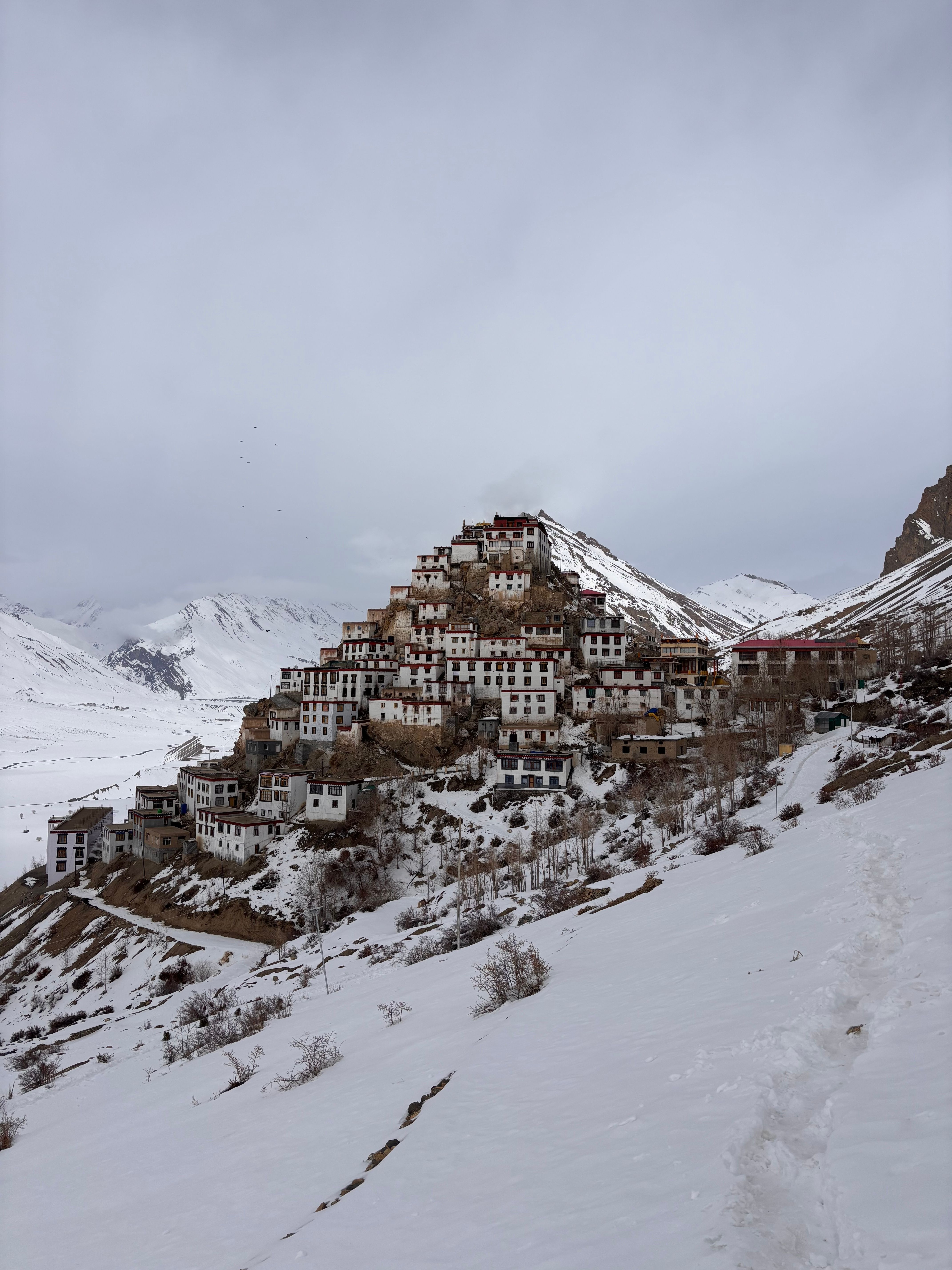
– Ki Gompa stands as Spiti’s largest monastery, perched on a hill and visually striking from a distance. A sunrise ascent reveals a landscape of scree and expansive skies.
– Inside Ki Gompa, visitors may receive guided tours from monks who speak excellent English and offer access to typically restricted areas. A notable anecdote is the historical room associated with the Dalai Lama’s exile from Tibet, located not far from the monastery.
– A cross-valley excursion reveals a western Spiti that many travelers overlook. This area is less commercial and more serene, characterized by deeper canyons and peculiar rock formations that punctuate the riverbed. The stark contrast with the more frequently visited eastern side underscores the valley’s immense geographic and aesthetic variety.
– The route includes visits to Chicham and its high-altitude bridge, as well as the villages of Hikkim and Komic. Hikkim is renowned for hosting the highest post office in the world, attracting visitors eager to mail a letter from this record-setting site. Komic, often cited as the highest village accessible by road in Asia, embodies a more tranquil, pastoral locale with livestock and a slower pace of life.
– As daylight fades, the ride back to Kaza completes a day rich with panoramic views and cultural contrasts.
Day 5: Demul—an off-the-beaten-path village
– A recommendation from a local guesthouse keeper led to a day of intentional isolation in Demul, reachable via a challenging return trip to Komic followed by a demanding track across black-sand terrain.
– The payoff is intimate, with interactions that provide a window into Spitian daily life: children welcoming visitors into homes, a mother preparing tea and bread, and opportunities to observe traditional roofing and craftwork.
– The experience offers a powerful reminder of the region’s remoteness and the warmth of its residents, set against a backdrop of awe-inspiring mountainous scenery.
Day 6: Chandratal Lake—endurance and elevation
– The final day ascends to Chandratal Lake, a high-altitude body at roughly 4,300 meters. While the lake itself may be modest, the surrounding peaks and glaciers create unforgettable vistas.
– Chandratal lies within a “dead network zone,” a no-signal area that challenges navigation but enhances immersion in the landscape. Staying in a nearby tent camp provides a sense of alpine isolation reminiscent of high-altitude expeditions.
A note on the broader context
This itinerary highlights the Spiti Valley’s distinctive blend of Tibetan-influenced culture, rugged geography, and unspoiled village life. The region’s inaccessibility and limited infrastructure contribute to a sense of isolation that many travelers find profoundly rewarding. For those considering a similar journey, preparing for altitudinal adaptation, regional permit requirements, and challenging road conditions is essential. Engaging with local guides and residents respectfully enriches the experience and supports small communities that maintain this remarkable cultural and ecological landscape.
Closing reflections
The Spiti Valley offers a rare combination: stark beauty, ancient spiritual traditions, and communities that retain a sense of authenticity amidst the pressures of modernization. A six-day exploration through Kalpa, Tabo, Dhankar, Kaza, Ki Gompa, and Chandratal reveals a landscape of constant surprise—where every turn presents a new panorama, and every encounter with locals provides a deeper appreciation for a world that still feels remote.
If you’re inspired by this route, consider planning with attention to permit procedures, vehicle readiness for high-altitude driving, and sustainable travel practices to ensure that Spiti’s incomparable beauty remains intact for future visitors.
Leave a Reply